1. Acoustic Localization and Head-Related Transfer Functions
Human auditory perception determines the location of sound sources through two primary mechanisms: Interaural Time Difference (ITD)—the arrival time delta between the left and right ear—and Interaural Level Difference (ILD)—the relative sound pressure difference created by head shadowing. Computational audio systems approximate these cues using Head-Related Transfer Functions (HRTF), which adjust frequency curves and micro-delays to simulate three-dimensional spatial environments through stereo headphones.
However, software-level HRTF algorithms can only perform accurately if the underlying physical transducer reproduces sound without phase distortion or frequency masking. Consumer gaming headsets often feature a V-shaped tuning curve, heavily boosting bass (80Hz - 250Hz) and upper treble. While this creates impactful explosions, it can mask critical footsteps, reload cues, and surface rustling located in the crucial 1,000Hz to 4,500Hz midrange band.
2. Transducer Architecture: Dynamic vs. Planar Magnetic
The physical driver within the ear cup converts electrical signals into sound pressure waves. Two primary driver types dominate performance audio:
- Dynamic Moving-Coil Drivers: A cylindrical copper voice coil glued to a conical Mylar or biocellulose diaphragm sits within a circular magnetic gap. While cost-effective and light, the diaphragm can flex irregularly under high velocities (cone breakup), causing harmonic distortion that smears spatial detail.
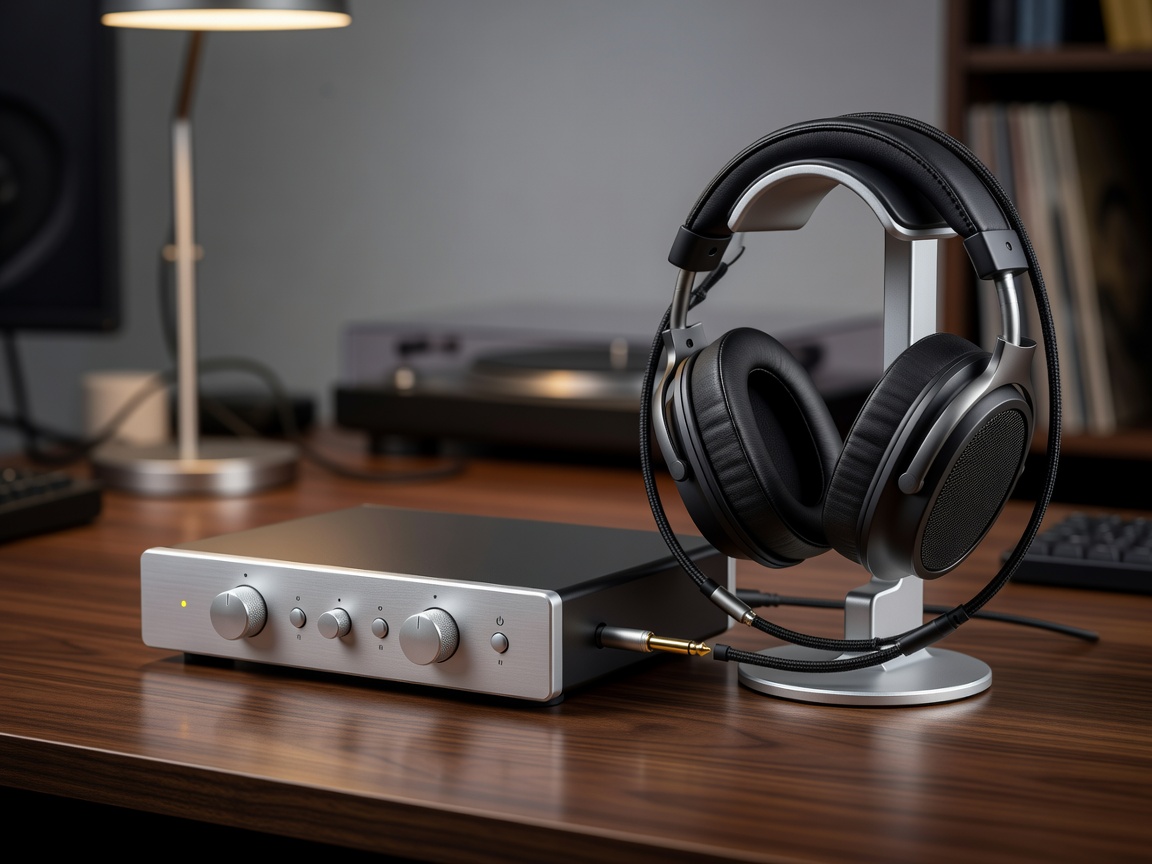
- Planar Magnetic Transducers: A micro-thin polymer membrane with an etched conductive trace array is suspended between opposing arrays of permanent neodymium bar magnets. Current passing through the traces moves the entire membrane simultaneously in an isodynamic motion. This uniform planar movement delivers fast transient attack times, minimal phase distortion, and clean instrument separation.
3. The Technical Role of Discrete External DACs and Amplifiers
PC motherboards are electrically dense environments filled with switching power supplies, high-current voltage regulator modules, and PCIe data lines. Onboard audio chips, while technically competent on paper, frequently suffer from electromagnetic interference (EMI), leading to audible ground floor hiss and jitter during heavy GPU rendering.
An external USB Digital-to-Analog Converter (DAC) isolates the audio signal conversion away from internal PC noise. High-performance DAC chips (such as those from ESS Sabre or Asahi Kasei Microdevices) decode digital pulse-code modulation (PCM) streams into clean analog signals with high signal-to-noise ratios (SNR > 115dB) and Total Harmonic Distortion plus Noise (THD+N) below 0.0005%.
Acoustic Topology & Driver Engineering
| Evaluation Metric | Planar Magnetic Open-Back | Dynamic Driver Closed-Back | Integrated USB Gaming Headset |
|---|---|---|---|
| Transient Response | Ultra-Fast (<0.05ms) | Moderate (0.2ms - 0.5ms) | Moderate to Slow (>0.5ms) |
| Soundstage Width | Expansive, Natural Depth | Constrained, In-Head Focus | Artificially Expanded DSP |
| Passive Noise Isolation | Minimal (Ambient Bleed) | High (18dB - 26dB Passive) | High (Acoustic Foam Cups) |
| Power Requirement | High (Requires Dedicated Amp) | Low to Moderate (16-80 Ohms) | Self-Powered USB 5V Bus |
| Harmonic Distortion | <0.1% THD at 94dB SPL | <0.5% THD at 94dB SPL | >1.0% under peak bass load |
4. Open-Back vs. Closed-Back Staging Mechanics
The physical enclosure of the ear cup defines the soundstage envelope:
Closed-Back Designs: Seal the driver inside a rigid acoustic chamber. This traps back-wave energy, creating higher low-frequency pressure and isolating the user from outside room noise. However, reflections off the inner cup wall create standing waves, causing directional audio cues to sound closer or trapped "inside the head."
Open-Back Designs: Feature an acoustically transparent metal mesh behind the driver, allowing the rear sound waves to disperse freely into the room. This prevents internal reflections and produces a wider, more natural soundstage, making it easier to gauge the distance and elevation of sound events in competitive titles.